
For decades, Body Mass Index (BMI) has been one of the most commonly used methods for assessing whether someone is at a healthy weight. Doctors, insurance companies, fitness programs, and healthcare organizations have relied on BMI because it’s quick, inexpensive, and easy to calculate.
However, as fitness science has evolved, experts have realized that BMI tells only a small part of the story.
Two people can have the exact same BMI but dramatically different body compositions. One could be a highly trained athlete with low body fat and significant muscle mass, while the other may have high body fat and very little muscle. According to BMI, both individuals fall into the same category—even though their health profiles are completely different.
This is why body fat percentage has become one of the most valuable measurements for understanding overall health and fitness.
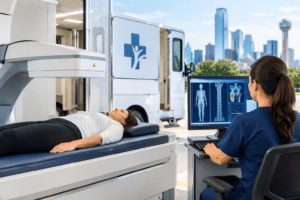
At My Bodee Scan, we help individuals, athletes, nutrition coaches, fitness professionals, and corporate wellness programs move beyond outdated measurements by providing accurate 3D body scans that reveal what’s really happening inside the body.
What Is BMI?
Body Mass Index (BMI) is a mathematical formula that compares your height and weight.
The calculation is simple:
BMI = Weight ÷ Height²
Based on the result, individuals are typically categorized as:
- Underweight
- Normal weight
- Overweight
- Obese
Healthcare providers have used BMI for decades because it provides a quick screening tool for large populations.
While it has value in public health research, BMI was never designed to measure body fat.
Instead, it estimates whether someone’s weight falls within a statistically expected range for their height.
The Biggest Problem with BMI
BMI assumes that all weight is the same.
Unfortunately, your body doesn’t work that way.
Weight consists of many components, including:
- Muscle
- Fat
- Bones
- Water
- Organs
- Connective tissue
BMI doesn’t distinguish between any of them.
A muscular athlete and someone with excess body fat may receive identical BMI scores despite having completely different health risks.
Example 1: The Athlete
Imagine a 6-foot male weighing 220 pounds.
Because he has years of strength training experience, much of his weight comes from muscle.
According to BMI, he may be classified as overweight or obese.
In reality, he could have less than 12% body fat and excellent cardiovascular health.
Example 2: The Sedentary Adult
Now imagine another individual with the exact same height and weight.
This person exercises very little and carries significantly more body fat.
Although their BMI is identical to the athlete’s, their health risks are much higher.
BMI cannot tell the difference.
What Is Body Fat Percentage?
Body fat percentage measures how much of your body consists of fat compared to lean tissue.
Unlike BMI, it separates healthy muscle from stored fat.
For example:
- Total Body Weight: 180 pounds
- Body Fat: 20%
- Lean Muscle and Other Tissue: 80%
This provides a far more accurate picture of overall fitness.
Rather than focusing solely on weight, body fat percentage answers important questions such as:
- Am I losing fat?
- Am I gaining muscle?
- Is my workout program effective?
- Is my nutrition plan working?
- Am I improving my overall health?
These are questions BMI simply cannot answer.
Why Body Fat Percentage Matters More
1. It Measures Actual Health Progress
Most people don’t start exercising simply to weigh less.
They want to:
- Lose fat
- Build muscle
- Improve strength
- Increase energy
- Reduce health risks
Body fat percentage directly measures these improvements.
Even when body weight stays the same, body composition can improve dramatically.
2. Muscle Weighs More Than Fat
One of the biggest misconceptions in fitness is that muscle weighs more than fat.
Technically, a pound is always a pound.
However, muscle is much denser than fat.
This means five pounds of muscle occupies much less space than five pounds of fat.
Someone who gains muscle while losing fat may look dramatically leaner without seeing much change on the scale.
That’s why relying solely on weight often becomes discouraging.
Body Composition Gives You the Complete Picture
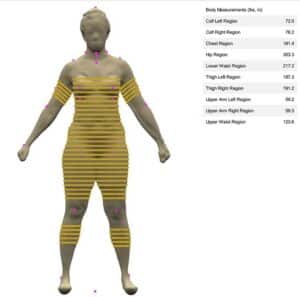
A professional 3D body scan measures much more than body fat percentage.
It also provides insights into:
- Lean muscle mass
- Fat mass
- Circumference measurements
- Waist-to-hip ratio
- Body symmetry
- Weight distribution
- Progress tracking
- Visual 3D body model
Instead of one number, you receive dozens of measurements that help explain how your body is changing.
Why the Scale Can Be Misleading
Many people become frustrated when their weight doesn’t change after weeks of healthy eating and exercise.
The truth is, positive changes may still be happening.
For example:
Week 1:
- Weight: 180 lbs
- Body Fat: 28%
Week 8:
- Weight: 180 lbs
- Body Fat: 23%
Although the scale hasn’t moved, you’ve lost fat while increasing lean muscle.
Without measuring body composition, you might never know.
This is why so many trainers encourage clients to stop obsessing over weight alone.
Who Benefits Most from Body Fat Analysis?
Body composition testing is valuable for almost everyone.
Weight Loss Clients
Track fat loss instead of simply watching the scale fluctuate.
Athletes
Monitor lean muscle development while maintaining peak performance.
Personal Trainers
Show clients measurable progress beyond pounds lost.
Nutrition Coaches
Adjust meal plans using objective body composition data.
Corporate Wellness Programs
Encourage employee engagement with measurable health metrics instead of generic wellness goals.
Healthcare Providers
Use body composition alongside traditional health assessments to better monitor patient progress.
How My Bodee Scan Makes It Easy
Since 2015, My Bodee Scan has made advanced body composition analysis more accessible by bringing professional-grade 3D scanning technology directly to clients throughout the Dallas-Fort Worth area and beyond.
Our mobile scanning services are ideal for:
- Homes
- Gyms
- Corporate offices
- Apartment communities
- Medical facilities
- Wellness fairs
- Schools
- Universities
- Military bases
- Community events
- Senior living communities
Each scan takes only a few minutes and provides a detailed report that can be used to monitor progress over time.
When Should You Measure Body Fat?
For most people, scanning every four to eight weeks provides enough time to see meaningful changes.
Athletes or individuals following structured fitness programs may benefit from more frequent assessments.
The key is consistency. Measuring under similar conditions each time provides the most accurate comparisons.
Frequently Asked Questions
Is BMI completely useless?
No. BMI remains useful as a general population screening tool. However, it should not be the only measurement used to evaluate an individual’s health or fitness.
Is body fat percentage more accurate?
Yes. Body fat percentage provides a much clearer understanding of body composition by distinguishing fat from lean muscle and other tissues.
Can I have a normal BMI but unhealthy body fat?
Absolutely. This condition, sometimes referred to as “normal weight obesity,” occurs when someone has a healthy body weight but a high percentage of body fat.
How accurate are 3D body scans?
Professional 3D body scanning technology provides highly consistent measurements that are ideal for tracking changes over time and monitoring fitness progress.
How long does a scan take?
Most scans are completed in just a few minutes, making them convenient for individuals, teams, and organizations.
See Beyond the Scale with My Bodee Scan
Your health is about more than your weight. Understanding your body composition gives you the information you need to make smarter decisions, celebrate real progress, and stay motivated throughout your fitness journey.
Whether you’re working toward weight loss, improving athletic performance, building muscle, or supporting a healthier lifestyle, My Bodee Scan provides the advanced technology and professional insight to help you achieve your goals. As the first mobile body scanning service in the Dallas-Fort Worth area, we bring accurate, convenient body composition analysis directly to your home, gym, office, or event.
Ready to move beyond BMI? Schedule your professional 3D body scan with My Bodee Scan today and discover what your body is really telling you.